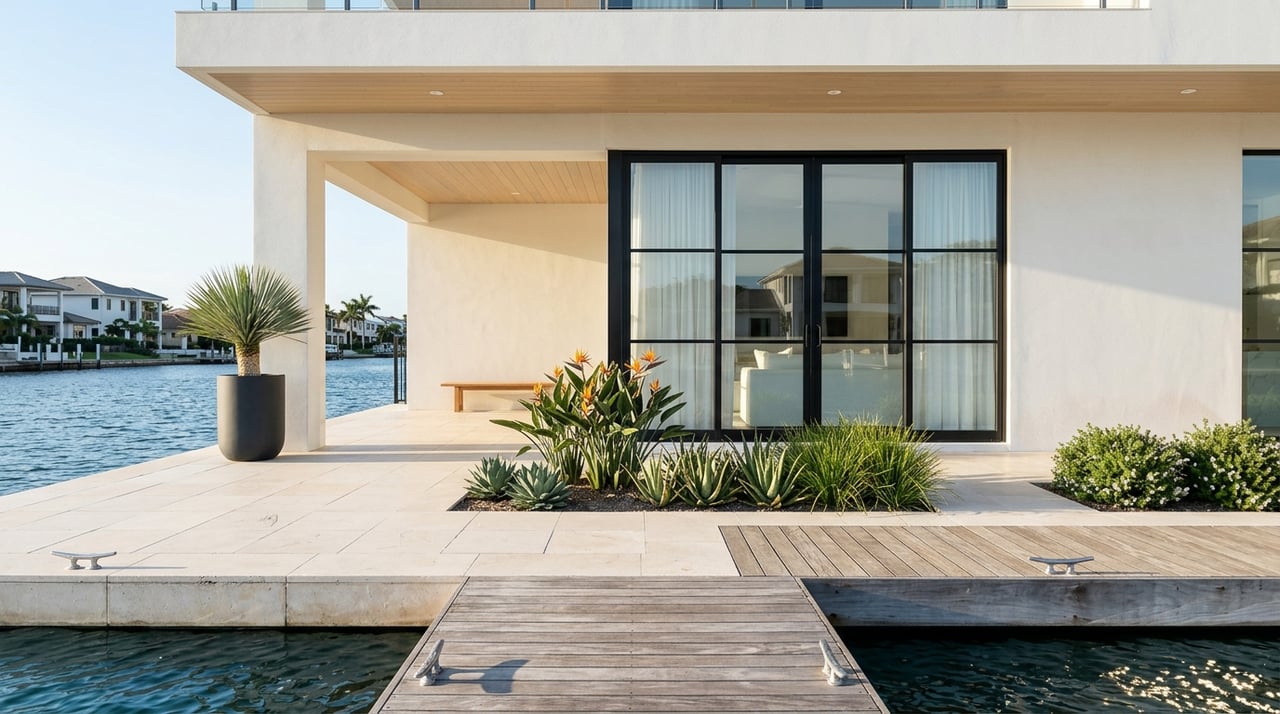
Key Considerations for Huntington Harbour Waterfront Homes
June 18, 2026
June 18, 2026
If you are thinking about buying on the water in Huntington Harbour, you already know this is not a typical coastal home search. Inventory is limited, price points vary widely, and the details that matter most often have less to do with square footage and more to do with dock rights, channel location, and boat access. If you understand those factors before you write an offer, you can make a smarter decision and avoid expensive surprises. Let’s dive in.
Huntington Harbour is a man-made residential harbor in northwest Huntington Beach that dates back to the mid-1960s. According to the City of Huntington Beach’s harbor overview, it spans about 1.4 square miles, includes six islands, more than 500 bayfront homes, and over 3,000 private boat slips.
The harbor is also built for active water use. The city notes that Huntington Harbour includes four public beaches, two public launch ramps, a fire station, a marine safety rescue boat operations station, and the Huntington Harbour Yacht Club. The city’s General Plan also treats the waterways as part of the local circulation network and supports navigable waterways for recreation and commuter use.
For buyers, that means you are not just purchasing a home with a view. You are buying into a specific waterfront setting where access, frontage, and marine use shape both lifestyle and value.
Huntington Harbour is a small and segmented market, so pricing can shift quickly depending on location, property type, and dock setup. Recent market snapshots show an average home value of about $2,552,157, a median list price of $2,911,500, and a median sale price around $2.4 million over the last three months.
Just as important, the number of true waterfront listings is often very limited. A recent Zillow waterfront search showed only five waterfront listings ranging from roughly $2.995 million to $10.998 million. That kind of low supply can make each property feel very different from the next.
A practical way to think about pricing is by property type and frontage.
This range is one reason local guidance matters. Two homes can sit in the same broader harbor area and still offer very different value depending on their channel exposure, dock size, and privacy.
One of the most important value drivers in Huntington Harbour is where the home sits on the water. While the city does not formally define a pricing system for main-channel versus interior-channel homes, the distinction shows up clearly in how properties are marketed and how buyers respond to them.
In simple terms, main-channel homes usually offer broader water views, more activity, and stronger visibility during events like boat parades. Interior-channel or inlet homes often trade some of that wide-open exposure for more privacy and less wake activity.
Neither option is automatically better. It depends on how you want to live.
This is where in-person comparison matters. A home that sounds ideal online may feel too exposed once you visit, while a quieter inlet location may be exactly what you want for everyday use.
In many waterfront neighborhoods, buyers focus first on the house. In Huntington Harbour, you should give equal attention to the dock.
Dock ownership and usage are not uniform here. Recent listings show a mix of private docks, deeded slips, HOA-controlled slips, and marina-based alternatives. Sizes also vary meaningfully, from around 25 feet to 50 feet, with some larger estate docks able to accommodate multiple vessels.
That means a listing that says “dock” does not tell you enough on its own. You need to know exactly what rights come with the property and what limitations apply.
These are not minor details. They directly affect convenience, cost, and long-term usability.
A slip that works on paper may not work in practice. Huntington Harbour has specific access conditions that matter if you plan to keep a boat at the property.
The Orange County Sheriff’s Harbor Patrol states that ocean access runs through the Seal Beach Weapons Station by way of Anaheim Bay. Harbor-wide, there is a 5 mph no-wake restriction to the breakwater, and there are also restrictions affecting personal watercraft, kayaks, and stand-up paddleboards in that corridor.
Huntington Beach municipal code separately sets a five-mile-per-hour speed limit in harbor waters and prohibits towing in Huntington Harbour, airboats, and mooring beyond the pierhead line. If boating is a major part of your plan, these rules should be part of your decision-making early.
A beautiful waterfront home is only a fit if the boating setup matches how you actually plan to use it.
Huntington Harbour is not the open ocean, and that matters when you are evaluating boat compatibility. The city’s harbor overview describes the harbor as roughly 15 to 20 feet deep.
That may be workable for many boats, but buyers should not assume a residential slip fits their vessel without checking draft and clearance. Marina alternatives in the area also highlight how physical dimensions matter. Huntington Harbour Marina notes 188 wet slips ranging from 20 to 75 feet and a 23-foot bridge height, while Peter’s Landing Marina accommodates boats from 31 to 96 feet.
If your boat is larger, taller, or deeper-draft, these details become especially important. It is far better to confirm fit before closing than to find out afterward that you need a different mooring solution.
Huntington Harbour offers more variety than some buyers expect. Housing stock ranges from 1960s and 1970s condos and townhomes to rebuilt single-family homes and large estate properties.
That spread creates different entry points into the waterfront market. Some buyers prioritize direct frontage and private dock access. Others prefer a smaller attached home with a deeded slip, lower maintenance, or community amenities.
The right fit depends on how you balance home size, maintenance, privacy, and boating needs. In a harbor like this, the best purchase is usually the one that matches your day-to-day lifestyle, not just the one with the flashiest listing photos.
In any home purchase, due diligence matters. In waterfront property, it matters even more because the land, the water, and the dock all shape what you are actually buying.
For Huntington Harbour buyers, a few diligence points tend to carry the most weight. These questions can affect value, usability, and future resale.
A waterfront purchase is usually strongest when you evaluate the house and the marine setup together. If either side falls short, the property may not deliver the lifestyle you expect.
Huntington Harbour is one of those markets where broad coastal knowledge is not enough. The details that shape value here are highly local, from channel orientation to slip configuration to the difference between a quiet inlet and a front-row main-channel setting.
That is why buyers benefit from a clear, practical read on each property instead of relying on generic waterfront assumptions. A polished listing can highlight views and dock access, but the real question is whether those features work for your goals now and hold up well over time.
When you approach the harbor with that mindset, you are in a much better position to buy with confidence.
If you are considering a waterfront home in Huntington Harbour and want calm, local guidance on pricing, frontage, and dock fit, Nick Lombardo can help you evaluate the details that matter most.
Stay up to date on the latest real estate trends.
From initial consultation to closing, experience a thoughtful, strategic approach tailored to your goals.